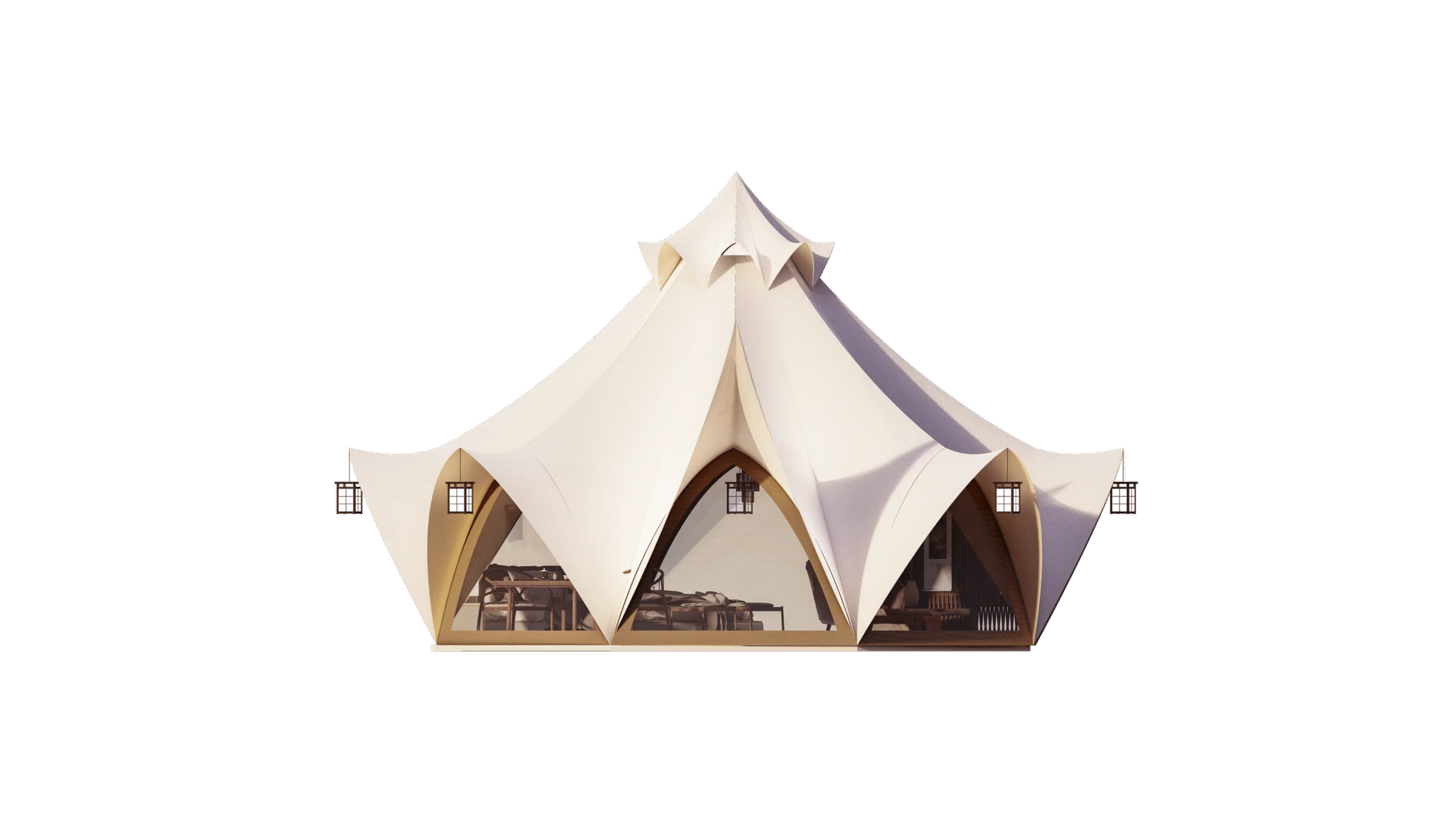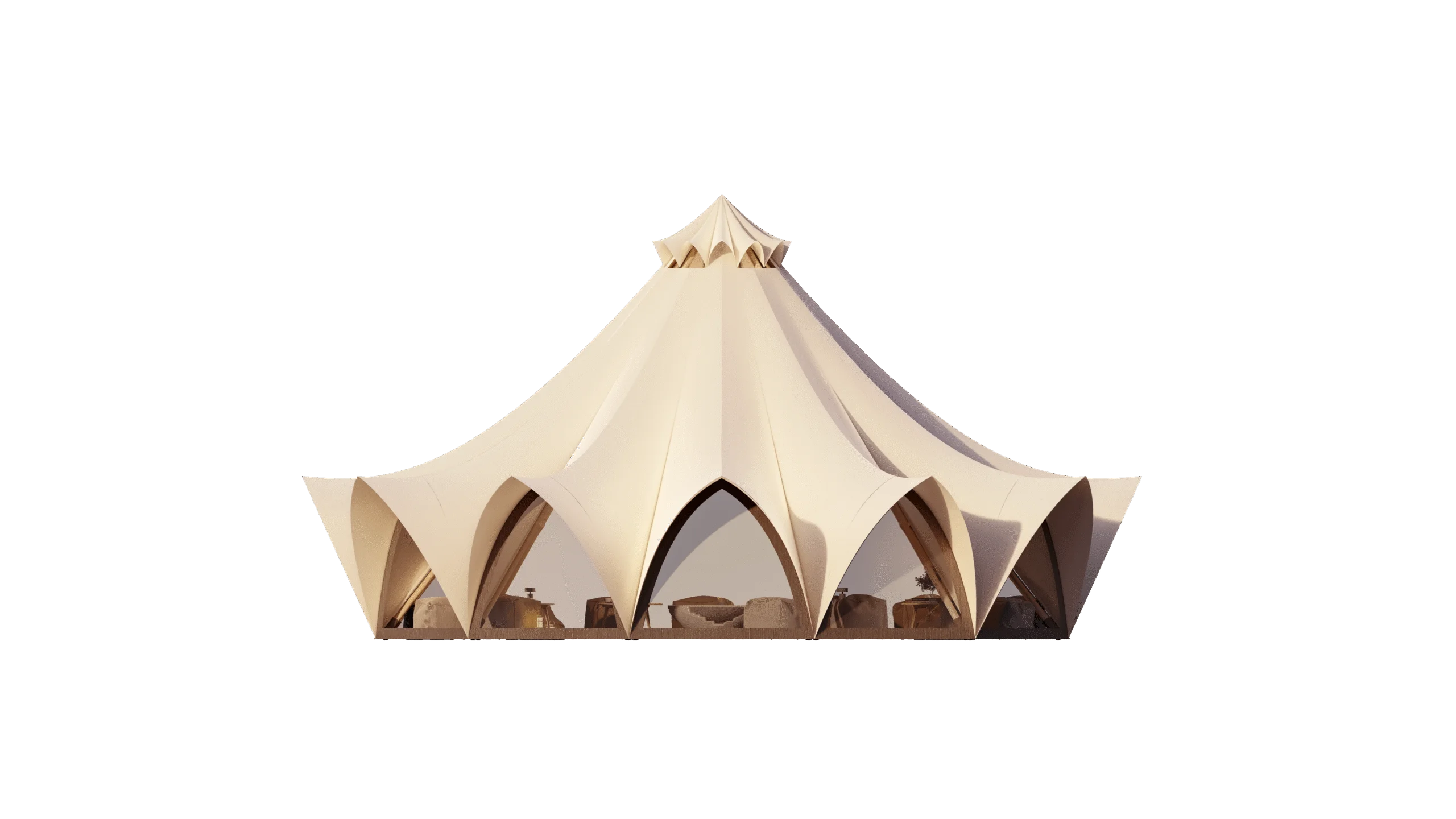
Sarah Dusek stood on a raw piece of Montana land in 2009 with nothing but a few suitcases, a six month old baby and the ashes of a life burned down by the global financial crash. She possessed no high level hospitality development background and completely lacked an understanding of venture capital terminology. Yet from that absolute zero she built Under Canvas into a multimillion dollar eco luxury empire that completely reshaped outdoor hospitality. Her secret to securing the immense funding required to build this sprawling network was not inherited wealth or a magical bank loan approval.
Traditional hospitality development is currently choking under the weight of soaring interest rates and terrified commercial lenders. Resort owners and development directors stare at pristine stretches of unused acreage on their properties and see only bureaucratic roadblocks. Commercial banks demand decades of operating history for permanent concrete structures while flatly refusing to finance what they wrongly dismiss as glorified temporary camping. The stakes are immense for properties operating thirty to one hundred and fifty rooms trying to capture the massive unprecedented surge in experiential travel. Missing this window of opportunity means surrendering millions in potential high margin revenue to bolder agile competitors who figure out the financing puzzle first.
The profound truth hiding in plain sight is that funding an eco luxury glamping expansion requires abandoning the traditional hotel financing playbook completely. The capital exists in abundance and it is actively hunting for the exact right projects right now. To unlock these deep vaults of private money developers must fundamentally rewire how they perceive their own assets and how they pitch their long term business models.
The illusion of the empty bank vault
The most paralyzing myth in the outdoor hospitality industry is that a developer needs an open checkbook from a traditional corporate lender before they ever break ground. Derry Green proved this spectacularly false when his lucrative European transport business collapsed overnight during the first pandemic lockdown. Facing universal credit and total financial ruin he simply built a wooden deck in his garden to entertain his children.
When photographs of that simple deck went viral across platforms and accumulated fifteen million views he did not draft a loan application for a local bank manager. He placed the unfinished concept onto an online booking platform and successfully secured two full years of advance reservations in three days. That sudden influx of direct customer cash became his immediate funding vehicle allowing him to use guest pre bookings to physically construct the exact luxury units those guests had just paid to sleep in.
Why the smartest money ignores the structures
Sophisticated investors do not actually care about the physical tents you plan to buy. Noel Homsie successfully closed multiple private funding rounds with angel investors to launch ENVI Lodges as a premier eco resort brand. Her revelation cuts straight to the bone of hospitality investment. She discovered that the idea is not the valuable thing but rather the true value resides entirely in the founder and the relentless execution of the team.
Institutional investors ruthlessly scrutinize the operational rigor and the people leading the charge because they know a breathtaking physical structure run by an incompetent operator is a guaranteed financial disaster. You must stop pitching the aesthetic appeal of a premium acrylic fabric tent and start pitching the robust financial architecture supporting it. High level investors search exclusively for what Homsie describes as strategic money. They desire funding partners who bring deep industry connections and international market access alongside their financial capital. Accepting funds from unaligned sources or taking what the industry bluntly calls stupid money frequently creates a toxic marriage of frustration that eventually suffocates the business entirely.
Traditional business metrics still govern the final decision but they must be polished to absolute perfection before entering any boardroom. Dusek learned the incredibly hard way that messy accounting and commingled funds destroy brand valuation instantly. She emphasizes that the absolute best way to attract serious investment is to present an immaculate EBITDA figure. A glamping operation generating one million dollars in clean bottom line profit can successfully command multipliers of three to ten times that exact figure depending on the specific market dynamics.
The rise of impact investment changes everything
The global funding landscape is rapidly shifting in favor of eco resorts. Private equity is actively hunting for projects that repair a broken environment rather than just sit heavily upon it. A traditional concrete hotel consumes massive amounts of energy and permanently destroys local biodiversity. Dusek proved that her luxury campsites operate using eighty seven percent less water and eighty four percent less power than a similarly sized traditional hotel.
When you present an asset light glamping model that actively regenerates the local ecosystem you instantly access a massive pool of green capital that traditional brick and mortar hotel developers can never touch. Authorities are starting to offer benefits to investments that have a positive environmental impact. Sustainability is no longer a nice to have on your pitch deck. It is the key that unlocks doors traditional capital cannot open.
Selling the vision of a ten site empire
Securing serious capital requires thinking vastly bigger than your immediate plot of land. When Green walked into the television pitching room looking for one hundred thousand pounds for a mere five percent equity stake he possessed an astonishing waiting list of forty four thousand people and a wildly profitable single location. The seasoned investors offered him all the money he asked for without hesitation.
They did not invest millions because he possessed a charming site in Lancashire. They invested their capital because he presented a lucid aggressive roadmap for scaling his brand to ten and twenty sites across the entire nation. A resort development director looking to add fifteen high end glamping structures cannot simply pitch the immediate localized revenue from those specific keys. The funding pitch must explicitly outline how this initial construction phase serves as an undeniable proof of concept for a much broader regional expansion. Investors are ultimately buying into a future empire.
The silent math separating scale from stagnation
Capital flows rapidly toward certainty and evaporates instantly in the presence of false economies. Ronnie Smith operates one of the most successful dome manufacturing businesses in Europe out of a massive facility in sunny Portugal. He constantly fields desperate calls from eager developers claiming they can source imported structures for twenty percent less than his premium quotes.
His dire warning should be etched into the cover of every hospitality business plan. A structure that costs a fraction of the price upfront but fails catastrophically in the middle of a peak summer season creates a massive unrecoverable revenue gap. An investor reviewing a funding proposal will instantly spot the fatal flaw in buying cheap imported materials. The true ultimate cost of a failed structure includes the immediate emergency labor for repairs, the lost average daily rate for the agonizing weeks it sits empty and the permanent brand damage from furious guests demanding immediate refunds.
Premium modular structures crafted from heavyweight marine grade fabrics with high frequency welded seams represent a highly secure long term asset class. These institutional grade structures survive extreme weather events including punishing winds up to one hundred and forty kilometers per hour. They also completely repel the aggressive tropical mold that entirely destroys lesser cheap fabrics within twenty four brief months. A slightly higher initial capital expenditure translates directly to a dramatically lower total cost of ownership over a fifteen year lifespan. When a developer explicitly builds their funding request around this level of uncompromising engineering they prove to the private equity firm that their aggressive revenue projections are entirely protected from nature.
How strategic capital shifts the entire landscape
The journey from an overlooked stretch of rural woodland to a highly lucrative experiential destination is paved entirely with strategic patience and clean financial modeling. You must stop waiting for a traditional corporate bank manager to suddenly understand the magic of luxury outdoor hospitality. Seek out the angel investors who crave environmental restoration, clean up your operational math until the profit margins gleam and build an asset light ecosystem that honors the earth.
The funds are eagerly waiting for those bold enough to build the future of regenerative travel exactly the way Sarah Dusek did when she looked out over that empty Montana field and decided to think bigger than the fear.
Recommended Next Steps
Begin by ruthlessly stripping your current financial reporting down to its absolute core components. Ensure every operational expense is categorized correctly to present a flawless clean profit metric to potential private equity partners or angel investors. Clean unassailable numbers are the universal language of serious capital and a messy ledger will kill a lucrative deal faster than a terrible location.
Build a phased operational expansion roadmap that looks far beyond your current property lines and existing room count. Map out exactly how the guest communication systems and staff procedures you perfect with your first ten premium acrylic fabric structures can be duplicated in entirely new regions. Presenting a clear aggressive vision for a multi site brand transforms you from a standard local operator into a highly attractive scalable investment vehicle.
Focus intensely on acquiring strategic money rather than just accepting the first check offered to your business. Interview your potential investors to discover what industry connections, international market access or operational wisdom they bring alongside their financial contribution. True growth occurs when funding partners actively open new doors and align completely with your regenerative environmental mission.
FAQ
What makes glamping expansion attractive to private equity investors?
Investors are powerfully drawn to the extraordinarily low capital expenditure and the rapid speed to market. Unlike a traditional hotel build taking years, an eco luxury site utilizing premium tents can be generating substantial returns within a single season while capturing the massive global surge in experiential travel.
How do eco luxury structures help secure green funding?
Green capital and specialized impact investors actively seek projects that drastically minimize environmental harm. By utilizing foundation free structures that consume a tiny fraction of the power and water of standard hotels you align your business directly with the strict sustainability mandates of modern investment portfolios.
Why is a scaling vision critically important for a pitch?
Private equity and venture capital firms require substantial exponential returns to justify their heavy involvement. A highly profitable single site is a wonderful lifestyle business but demonstrating precisely how that success will be multiplied across multiple locations proves the potential for a massive lucrative exit valuation.
Can pre bookings actually fund the physical construction?
Launching a compelling brand narrative and opening a digital reservation calendar before the physical build is fully complete allows you to capture direct customer revenue immediately. This strategic move acts as immediate construction capital and completely bypasses the urgent need for high interest debt in the crucial early phases.
Why should I avoid cheap imported structures when budgeting for investors?
Inexpensive lightweight materials degrade incredibly quickly and cause catastrophic downtime during peak profitable seasons. Budgeting for premium durable structures proves to sophisticated investors that your projected revenue stream is safely protected from constant replacement cycles and expensive weather related closures.