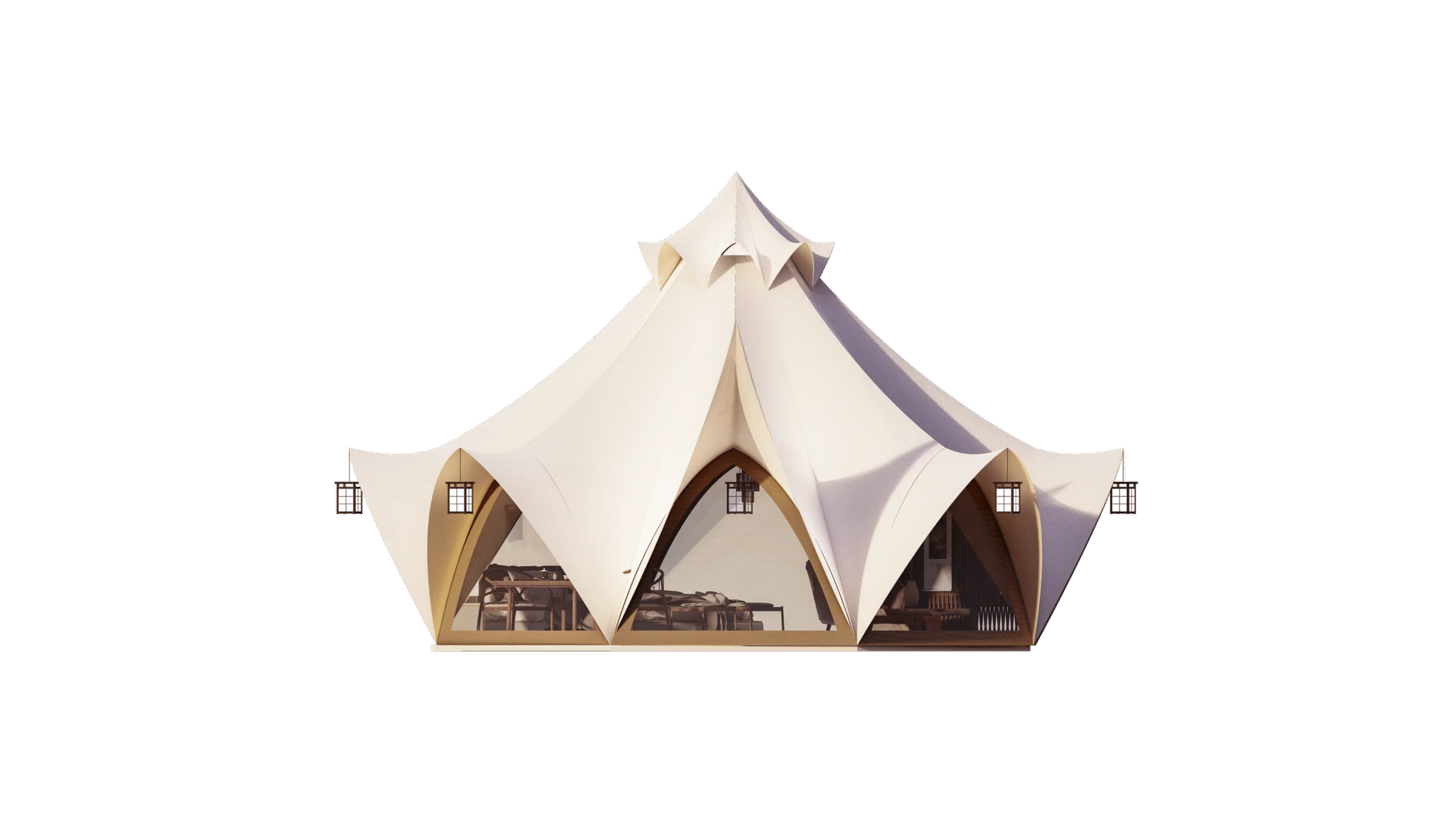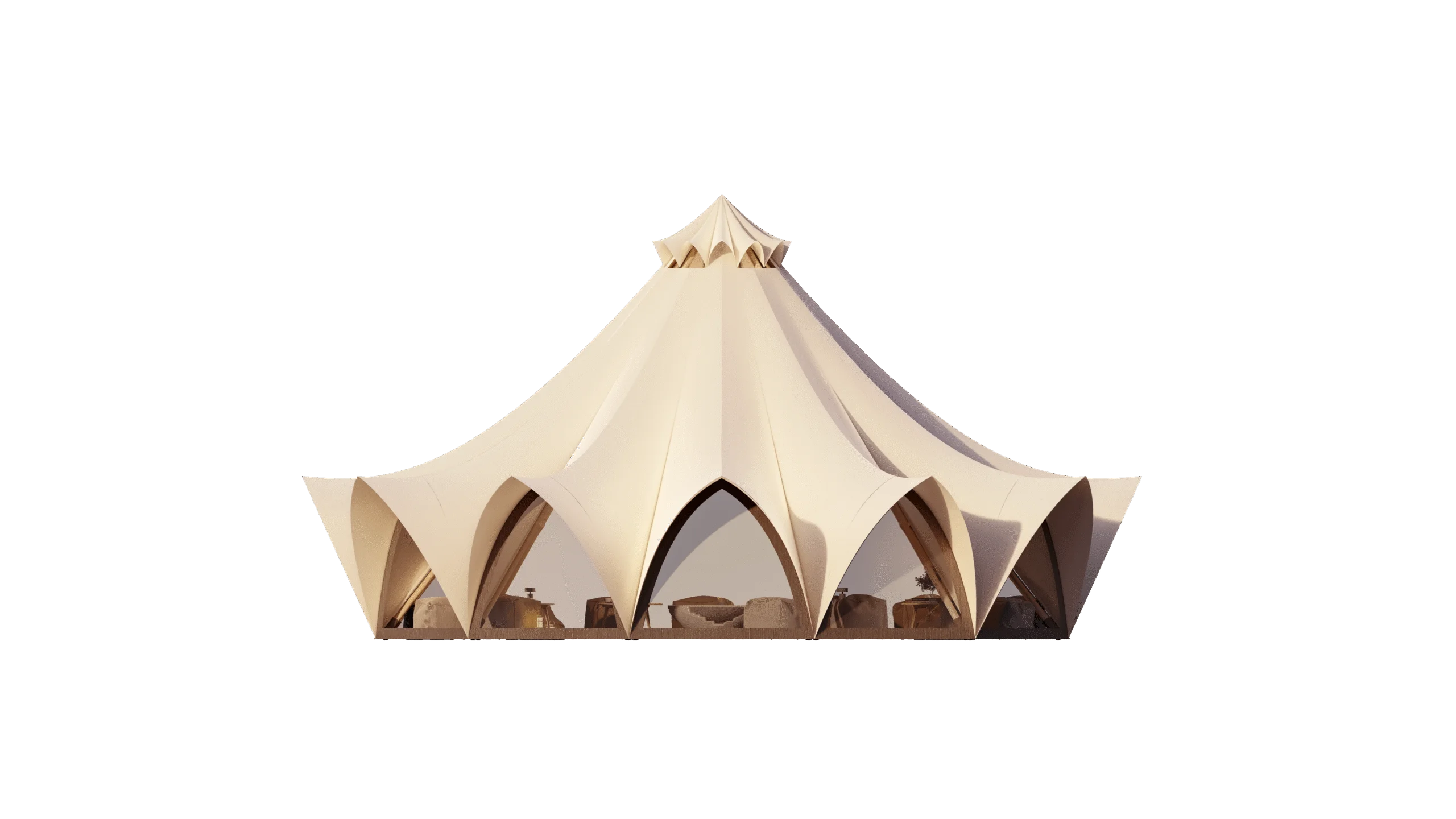
A hot-climate glamping unit can look perfect in photographs and still fail the guest the moment the afternoon sun hits the roof. The mistake is usually made months earlier, when the developer treats the roof liner as a nice extra instead of part of the revenue system. In tropical and coastal resorts, durable glamping tents need an exterior fabric and an interior liner strategy that can handle UV, humidity, heat, and rain at the same time. A thin cover might save money on the purchase order. Then it turns a $350 nightly suite into a warm, damp, review-killing room that needs refunds, repairs, and lost peak-season nights. The roof decision is not technical trivia. It is guest comfort, asset life, and ADR protection.
The greenhouse problem starts at the roof
Heat enters a glamping suite from every direction, but the roof takes the most punishment. In hot climates, the roof is where UV exposure, afternoon temperature gain, condensation, and fabric fatigue meet. If the exterior material is too light and the interior liner is treated as optional, the unit becomes a greenhouse with a bed inside it.
NLM source notes from manufacturing expert Ronnie Smith warn that thin materials can heat up quickly and make the interior unbearable. That word matters. Guests will forgive a gravel path, a rustic shower sign, or a longer walk to breakfast. They do not forgive a premium room that feels impossible to rest in at 3 p.m. The operator then pays twice: first in immediate service recovery, then in reviews that warn future guests away.
Thin, lightweight materials can “heat up a lot more” and make the interior “unbearable in terms of heat.” — Ronnie Smith, manufacturing expert
A proper roof liner creates a buffer between the sun-hit exterior and the bed zone below. It helps slow radiant heat, improves the perceived finish of the suite, softens acoustics during rain, and gives the operator a more stable interior. That does not replace ventilation, shade planning, or climate control. It gives those systems a fighting chance.
Why the exterior cover is half the asset
Developers sometimes budget the visible room components first: deck, mattress, lights, bath access, and furniture. Then the exterior cover gets treated as a commodity. That is backwards. Source notes identify the exterior fabric and liner setup as at least 50 percent of the value of the structure. If the cover fails, the suite fails with it.
The premium exterior cover can represent “at least 50% of the price” of the entire structure. — Ronnie Smith, manufacturing expert
Run the math on a $12,000 to $20,000 finished unit. If the roof and cover system represents half the value, a weak choice puts $6,000 to $10,000 of asset value at risk before the first review is written. If a hot-climate cover lasts only one or two years, the replacement cycle eats the very margin that made the project attractive.
The sharper cost is downtime. A unit charging $350 per night loses $2,450 from a seven-day closure before counting labor, guest relocation, cleaning disruption, shipping, or emergency repair premiums. Six units down for the same week cost $14,700 in room revenue. If that closure happens during peak season, the damage may exceed the cost difference between a cheap roof package and a better one.
UV damage is not only cosmetic
In resort sales meetings, yellowing fabric and cloudy clear panels are often framed as visual problems. They are more than that. They signal material fatigue. When a guest sees staining, chalking, milky windows, or a sagging liner, the property no longer feels premium. The room might still be technically usable, but the rate promise is damaged.
Hot climates punish surface-level solutions. UV exposure can turn weak view panels milky or yellow. Humidity can push moisture into seams and channels. Afternoon heat can stress adhesives, stitching, and connection points. A durable glamping tent for Costa Rica, Mexico, or the Caribbean must be specified for years of sun and rain, not for the first photoshoot.
Marine-grade acrylic is useful because it was designed for conditions that resemble hospitality abuse: sun, salt air, rain, wind, and constant handling. The important detail is solution-dyed fiber. The pigment is part of the fiber rather than a surface color sitting on top. That is why premium acrylic can stay white and resist UV fading far longer than cheaper coated materials.
Enchantents positions premium acrylic fabric as a 10 to 15 year material under proper care, with a 5 year warranty on permanent installations. That lifespan is not a decorative claim. It is the basis for a lower replacement budget, fewer emergency closures, and a cleaner visual promise across seasons.
Humidity turns small punctures into big failures
Hot-climate operators do not only fight heat. They fight wet heat. Condensation, wind-driven rain, damp bedding complaints, and mold risk all gather around the same weak points: seams, fabric channels, roof edges, and liner details.
Smith’s source notes warn that moisture can enter tiny puncture holes created by ordinary sewing. Once moisture enters a fabric channel, mold can move through the fibers and become hard to stop. That is the kind of failure guests may not fully see at first, but staff will smell it, maintenance will chase it, and managers will eventually pay for it.
A liner strategy helps manage the inner surface of the room. It also makes inspections easier because staff can spot sagging, condensation patterns, staining, or trapped moisture before the issue becomes a room closure. The liner is not there to hide the roof. It is there to make the roof system operate as part of a hospitality asset.
The $12,000 mistake is really a revenue mistake
Calling this a $12,000 mistake is conservative. That number represents a plausible finished unit exposed by a poor roof and liner decision. The full cost can be higher once lost nights and replacement cycles are added.
Consider a single unit at $350 per night. One week out of service costs $2,450. A three week wait for replacement materials costs $7,350. Add a $2,500 emergency cover replacement and the immediate hit is $9,850. Add staff time, guest compensation, and reputation damage, and the mistake can pass $12,000 quickly. For a six unit cluster, the same pattern becomes a five-figure operational event.
Now compare that with a stronger specification at purchase. A premium acrylic cover, correct liner, proper ventilation, and thermal planning may feel expensive in the proposal. Over a ten year operating period, though, six units that avoid repeated cover replacement can preserve tens of thousands of dollars that would otherwise go into repairs. The owner also preserves the rate story: clean white fabric, cool interior comfort, and rooms that feel intentional instead of patched.
What to ask before approving the roof package
Do not ask only whether the unit is waterproof. Ask how the roof behaves at 3 p.m. after six hours of sun. Ask what the fabric weighs, how it handles UV, how pigment is protected, how seams are sealed, and how the liner supports thermal comfort. Ask what staff should inspect after the first heavy rain. Ask what happens if a panel is damaged and how quickly the part can be replaced.
Also ask where the roof liner ends. A liner that looks good in the center but leaves heat bridges at edges, openings, and connection points can still create guest discomfort. The details around vents, doors, bath connectors, and terraces matter because guests experience the whole room, not the material sample.
Enchantents units can include thermal insulation and roof liners as part of the roof system, with terrace, bathroom, bedroom, and connector modules planned around the operating model. That is the right sequence. Decide the climate strategy before the room opens, not after the first heat complaint.
FAQ
What makes durable glamping tents different in hot climates? They need roof, fabric, liner, ventilation, and moisture details that can handle UV, heat, humidity, and rain together.
Why is a roof liner so important? It reduces heat transfer, improves comfort, softens rain noise, and helps the interior feel like a premium room rather than a sun-heated shell.
How much revenue can a one week closure cost? At $350 per night, one closed unit loses $2,450 in room revenue before replacement costs or guest compensation.
What material should resort developers prioritize? Premium marine-grade acrylic fabric is a strong choice because it resists UV, mold, and long-term fading better than cheap imported covers.
Is the roof liner only for climate control? No. It also affects acoustics, condensation management, visual finish, and the staff’s ability to inspect roof performance.
How long should premium acrylic fabric last? Enchantents positions premium acrylic fabric for 10 to 15 years with proper care and backs permanent installations with a 5 year warranty.
What should I inspect after heavy rain? Look for edge moisture, seam staining, liner sag, musty odor, pooling near connectors, and any sign that water is moving inside the roof system.
A roof liner is easy to cut from a budget because guests will not see it in the rendering. They will feel it in the room. What will your hot-climate roof package prove before the first peak-season booking arrives?
Other formats: FAQ Version → · Structured Data →