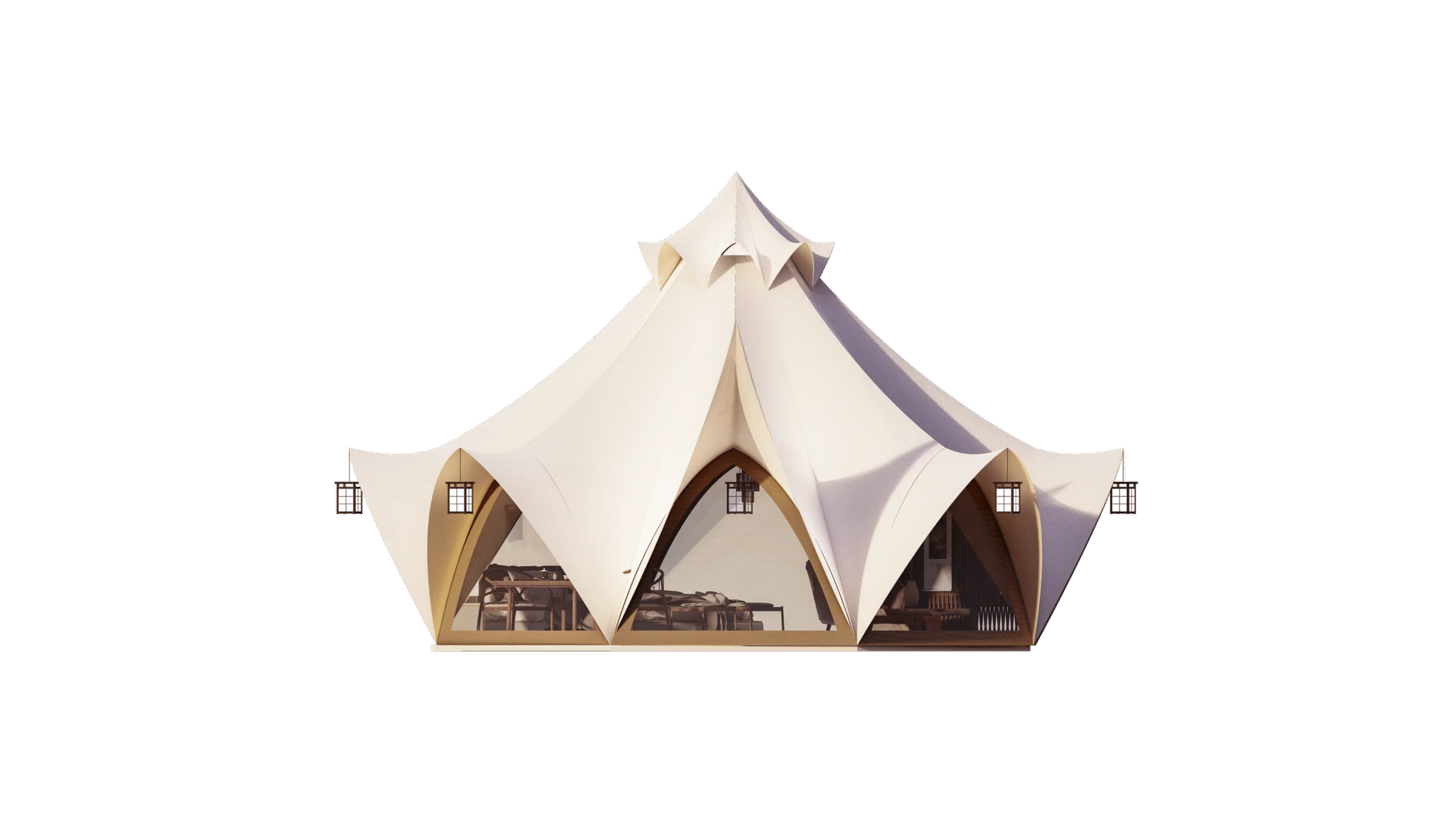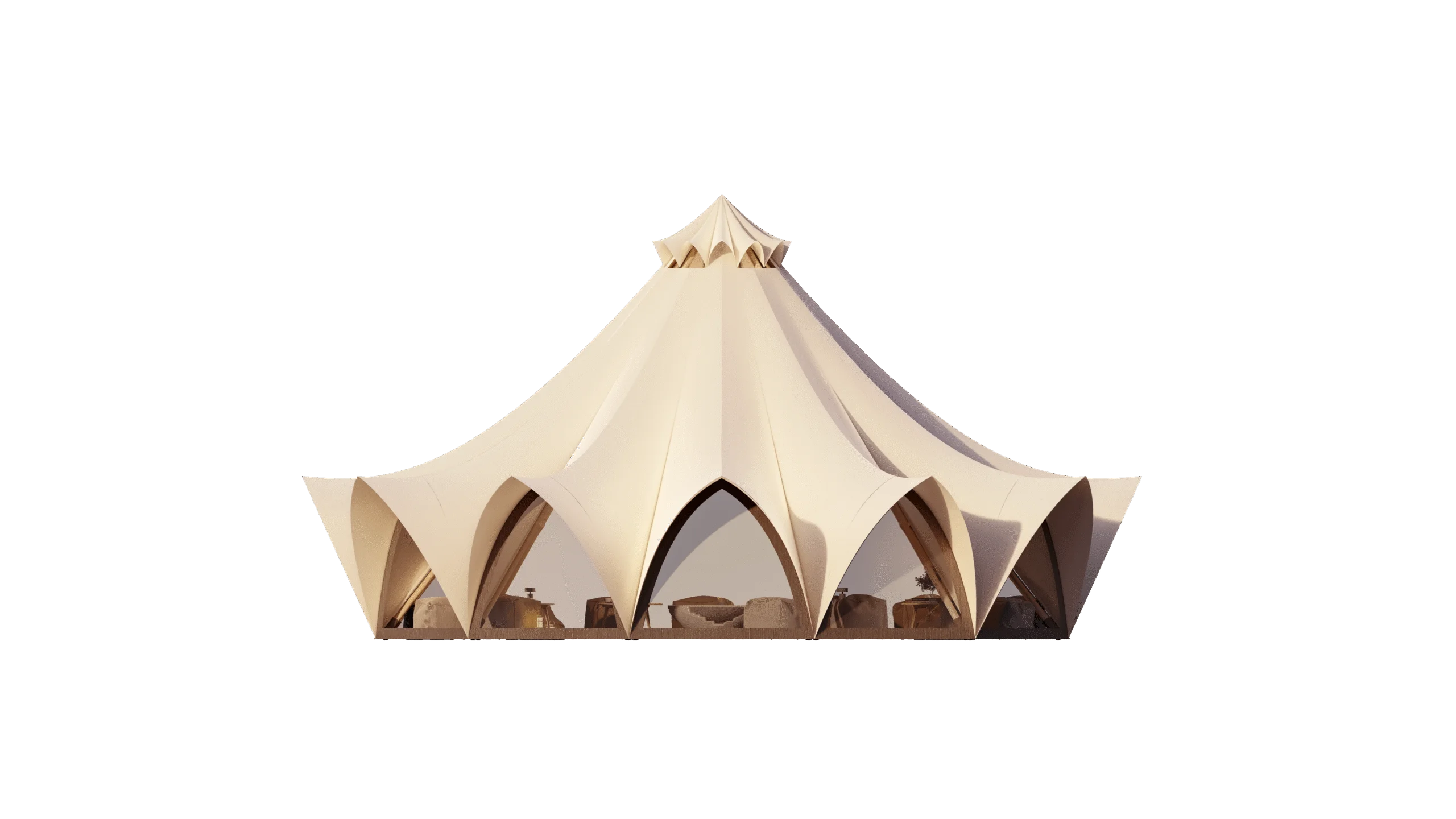
Marcus Chen had two spreadsheets open on his laptop.
One showed the renovation quote for his 24-room boutique hotel in San Miguel de Allende: $847,000. New bathrooms, updated HVAC, refreshed finishes. The other showed the cost of six Simetrix glamping units with full bathroom modules: $168,000.
Both would generate roughly the same annual revenue. One would take seven years to break even. The other would pay for itself in fourteen months.
He closed the hotel renovation spreadsheet.
The math that kills hotel renovations during downturns
Hotel room renovations follow a brutal cycle. Every eight to twelve years, the room needs a full refresh. Carpets, bathroom fixtures, lighting, furniture, paint. Industry data from STR Global puts the average full renovation at $35,300 per room. For a 24-room property, that is $847,200.
At an average daily rate of $220 and 65% occupancy, that room generates $52,370 per year in revenue. After operating costs, the owner nets roughly $18,300 per room. The renovation pays for itself in 4.6 years, assuming full occupancy holds.
During a recession, it does not hold.
Occupancy drops 15 to 25 points. The payback stretches to seven or eight years. Meanwhile, the capital is locked. You cannot move a renovated hotel room. You cannot reposition it. You cannot sell it without taking a loss.
A glamping tent follows different math.
The average luxury glamping unit from Enchantents costs between $22,000 and $28,000 including installation, platform, and bathroom module. At $280 per night and 65% occupancy, it generates $66,500 annually. Operating costs run higher as a percentage, but the absolute net per unit lands around $28,000.
Payback: 12 to 14 months.
Derry Green figured this out at Secret Garden Glamping. His viral site in Ireland booked out 44,000 people on a waiting list. He did not build a hotel. He kept adding glamping units because each one paid for itself before the next one arrived.
Why asset-light survives when asset-heavy drowns
The hospitality industry has a structural flaw that reveals itself during every downturn. Fixed costs.
A hotel with 24 rooms pays property tax on the entire building, insurance on the entire structure, and maintenance on systems that serve all rooms whether occupied or not. During a recession, revenue drops but fixed costs stay.
LJS Chichikan in Valladolid, Yucatan, took a different approach. Lorenzo Fluxa installed 34 glamping units across his property. When demand softened in shoulder season, he pulled four units offline. No heating costs. No housekeeping. No fixed overhead on units that sat empty.
His $8.75 million MXN investment generated consistent returns because he could scale down without bleeding.
This is the asset-light advantage. Glamping tents are modular. You add them when demand rises. You mothball them when it drops. The structure itself, built with marine-grade acrylic covers and solution-dyed fabric that resists UV degradation, survives the downtime without deterioration.
“The best recession-proof business is one where your fixed costs approach zero when revenue does.” — Paul Akers, founder of Fastcap
A hotel cannot mothball a wing without still paying for the roof, the fire suppression system, and the corridor lighting. A tent you zip closed.
The $819,000 difference that compounds
Let us stack the numbers side by side.
A 24-room hotel renovation costs $847,200. It takes 7 years to recover at full occupancy, 10 years during a downturn. During that recovery period, the owner carries debt service on the renovation loan, typically $6,000 to $8,000 per month.
Six glamping units cost $168,000. They recover in 14 months. After that, every dollar is profit. Over the same 7-year period, those six units generate $1.17 million in cumulative net revenue.
The hotel? $1.53 million in net revenue over 7 years, minus the $847,200 renovation cost. Net: $683,800.
The glamping operation? $1.17 million in net revenue, minus $168,000 in unit costs. Net: $1,002,000.
That is a $318,200 difference. And it gets worse for the hotel when you factor in the next renovation cycle at year eight.
Why modular expansion beats borrowed capital
Hotels expand through construction loans. These take 18 to 24 months to secure, another 12 to 18 months to build, and then the property needs to fill the new rooms immediately to service the debt. The interest clock starts ticking before the first guest checks in.
Glamping operators expand through cash flow. Three pilot tents fund six. Six fund twelve. The Enchantents modular system, built around the Simetrix and Mandala collections, is designed for this exact progression. Each unit installs in days, not months. The Tenara thread seams, NASA-grade PTFE that resists UV and weather, ensure the first tent looks as good as the twelfth when guests arrive.
Holos Retreat Center in Costa Rica followed this pattern. Starting with a small installation of Makto and Octagome tents in the Diamante Valley, the center expanded as bookings validated demand. Their $108,000 USD investment was not a bet on future demand. It was a response to demand that already existed.
This is the fundamental difference. Hotels build on speculation. Glamping operators build on confirmation.
The renovation trap that never stops paying
Here is the part hotel owners do not calculate. Renovation is not a one-time event. It is a subscription.
Every eight to twelve years, the cycle repeats. New design trends. Worn carpets. Bathroom fixtures that leak. Lighting that looks dated. The hotel industry calls it the “FF&E reserve,” setting aside 4 to 5% of revenue annually for furniture, fixtures, and equipment replacement. On a property generating $1.2 million in annual revenue, that is $48,000 to $60,000 per year tucked away for the next renovation.
Glamping operators face a different maintenance reality. The marine-grade acrylic covers on Enchantents tents carry a 10-year warranty against UV degradation. The Tenara thread used in every seam has been tested to outlast the fabric itself. When a cover does need replacement, the cost is a fraction of a hotel room refresh. You replace the cover, not the entire structure.
The Nest Costa Rica, perched on 555 acres in the Diamante Valley, runs Octagomes, Zoltans, and Decagomes across their property. Juan Pablo Barahona’s $138,000 USD investment has generated returns for years without a single full renovation cycle. The structures were built to survive. Not to be rebuilt.
Consider the cumulative cost over 20 years. A 24-room hotel renovates twice, possibly three times. Total capital outlay: $1.7 million to $2.5 million. Six glamping units with one cover replacement each: roughly $210,000. The gap is not incremental. It is existential.
What the next recession means for hospitality capital
Every hospitality recession follows the same script. Hotel owners freeze capital spending. Renovation projects get delayed. Guest experience degrades. Reviews drop. Bookings fall further. The spiral accelerates.
The operators who survive are the ones with the lowest breakeven point. Not the biggest brand. Not the most amenities. The lowest breakeven.
A glamping unit that costs $28,000 and generates $66,500 in annual revenue has a breakeven occupancy of roughly 35%. A hotel room that costs $847,200 to renovate and generates $52,370 in annual revenue needs 65% occupancy just to service the debt.
When the next recession hits, and the industry consensus is that it is already forming in 2026, the question is not whether your property will lose occupancy. It is whether you can survive at 40%.
If your breakeven is 35%, you survive and profit. If your breakeven is 65%, you bleed.
The 2008 financial crash proved this. Hotels across Europe and the Americas saw occupancy plummet below 50%. Many never reopened. Glamping operations, still niche at the time, weathered the storm because their cost structure allowed them to operate profitably at half occupancy. The next recession will be worse for hotels because guest expectations have risen while renovation costs have compounded.
Marcus Chen chose the path that let him sleep at night. His six glamping units paid for themselves before his hotel-owning neighbor had even finished the bathroom tile. When the downturn comes, his tents will still be profitable. The hotel across the valley will not.
The decisive question is not whether glamping outperforms hotels during recessions. It is why anyone still builds hotels at all.
Other formats: FAQ Version → · Structured Data →