Straight answers to the questions investors ask about glamping vs hotel in Mexico. Every figure below traces to a named source. The full narrative version of this comparison lives on our Mexico glamping hub.
Is glamping more profitable than a hotel in Mexico?
Yes, on margins. Net Operating Income runs 40% to 60% for glamping against 30% to 39% for traditional hotels, per MMCG benchmark data. The advantage comes from leaner staffing. Glamping needs about 1 full time employee per 5 to 8 units. Full service hotels need 1 per 1.5 to 2 rooms.
Nantli Living reports realized margins between 25% and 50% across its Mexican operations, varying with location and the strength of the commercial model. Edward Haynes describes the operating pattern as "lean operation": automated digital check-in and app based guest services replace front desk and concierge labor. Vertical systems like elevators and industrial HVAC do not exist in a tented property, so long term maintenance liabilities shrink.
The result is a luxury nightly rate on a low overhead cost base.
Key takeaway: Glamping NOI reaches 60% in Mexico, on about a quarter of hotel staffing intensity.
How much does it cost to build a glamping site vs a hotel in Mexico?
Glamping CapEx runs 30% to 50% below comparable U.S. builds, and the labor share of Mexican construction is the main lever. SER Projects puts the national split at 38% labor and 52% materials, with steel and cement accounting for 70% of the material slice. A 4 star hotel in Tulum costs about $1,400 USD per square meter, inflated by a 12% long haul trucking premium.
| Development type | Unit cost (USD) | Infrastructure per unit |
|---|---|---|
| Hotel, 4 star | $100,000 to $300,000+ per room | $1,200 to $1,450 per m² |
| Glamping, safari tent | $25,000 to $75,000 | $15,000 to $40,000 utility pad |
| Glamping, modular framed tent | $15,000 to $60,000 | $15,000 to $40,000 utility pad |
| Glamping, treehouse | $80,000 to $250,000+ | $15,000 to $40,000 utility pad |
| Institutional resort, 20 to 30 units | $2M to $10M total CapEx | MMCG benchmark |

MMCG benchmarks add a fixed $15,000 to $40,000 per unit for site development: utility pads, roads, and wastewater. SER Projects recommends two savings levers. Prefabricated bathroom modules cut wet trade labor and save about 5% of total CapEx. Value engineering workshops belong at the 30% design stage, before inflation and rework erode the savings.
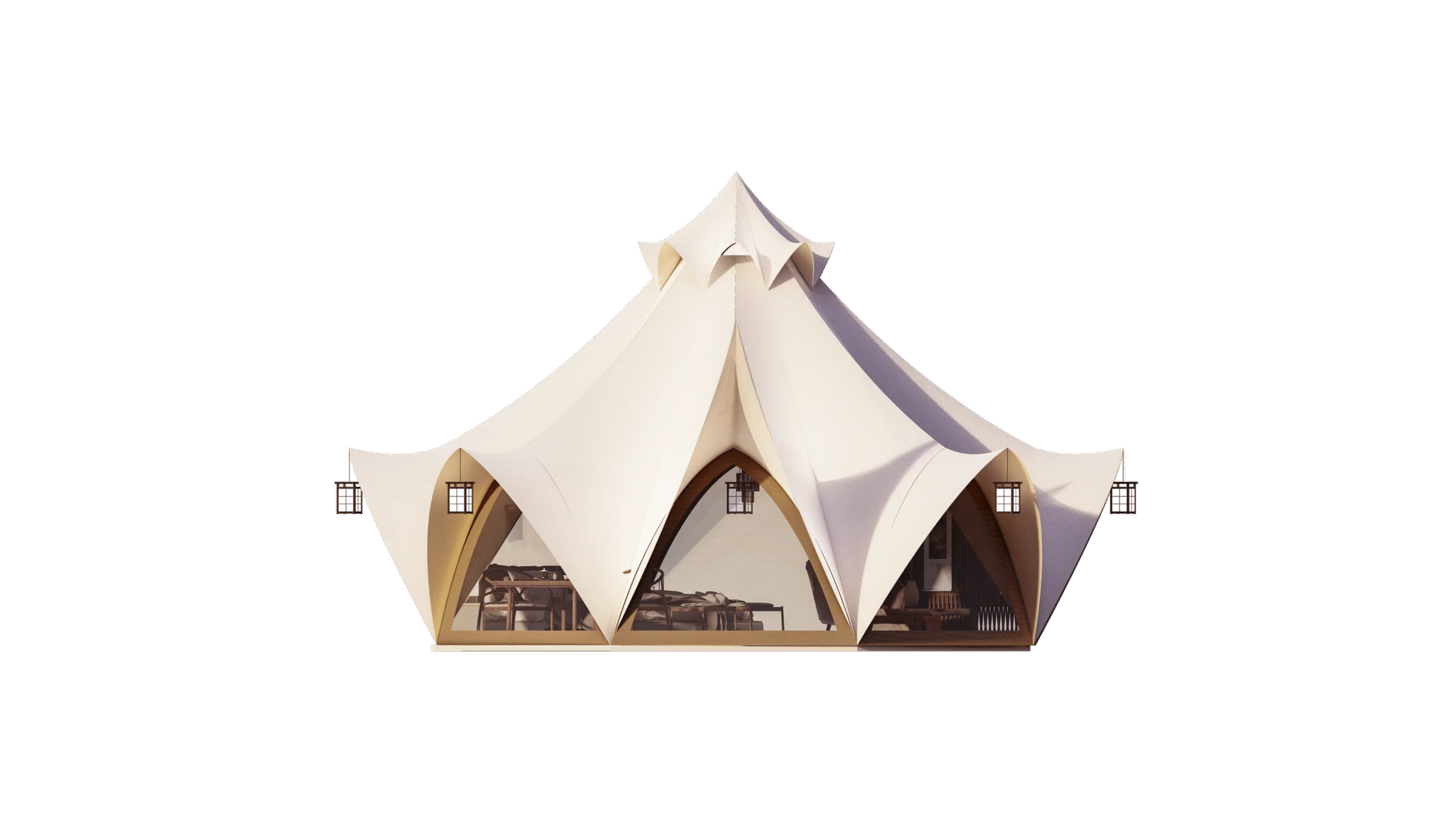
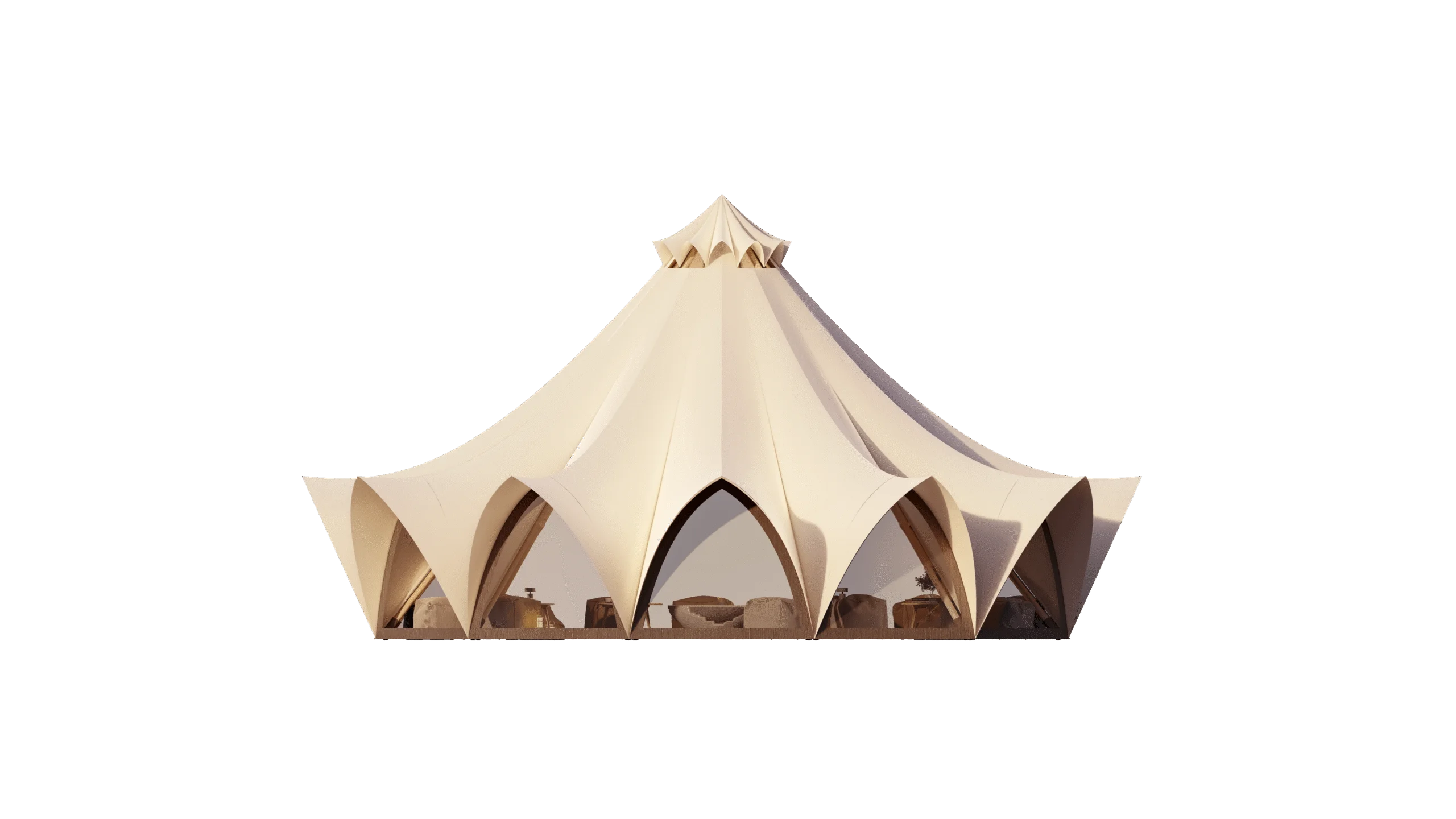
For reference, Enchantents builds 19 permanent models at its Veracruz facility. Prices run $350 to $750 per square meter, with 2 to 10 week lead times. Details are in the product catalog.
Key takeaway: Hotels carry room costs of $100k to $300k. Glamping units start near $15k, plus a fixed $15k to $40k per unit for site infrastructure.
What is the ROI and break-even period for glamping vs hotels?
Glamping breaks even at 25% to 40% occupancy. Hotels need 55% to 65%. Crossover Lodge investment data shows glamping delivering a Year 5 ROI of 125% to 200%, against 50% to 80% for stabilized hotels. Edward Haynes notes that high demand hard sided units have hit full capital payback in as little as 18 months under strong Mexican market conditions. Hotels cycle back over 7 to 10 years.
Financing tells the rest of the story. MMCG advises sizing debt against the weakest three consecutive months of DSCR. Seasonal dips trigger defaults before annual averages ever look bad. The HVS 2024 survey found elevated debt costs are already deterring traditional hotel construction. That credit environment favors glamping, which needs less capital up front and covers its debt sooner.

Key takeaway: Glamping breaks even at half the occupancy hotels need. Capital returns in 18 to 48 months, against a 7 to 10 year hotel cycle.
What permits do I need for glamping vs hotel development in Mexico?
Start with a regulatory feasibility analysis, because "glamping" is not a recognized zoning category in most Mexican municipal codes. Approval comes through adjacent classifications: Campamento, Recreational Resort, or Agritourism. MMCG identifies septic and wastewater capacity as the largest infrastructure cost and the most frequent point of failure for new projects.
Two specific levers matter for imported structures. The Asociación Mexicana de Glamping, led by president Miguel Ángel Huerta Vallejo of Nantli Living, works with developers on classification strategy. And the IMMEX duty relief program can save 0% to 5% on imported engineered structures, per SER Projects.
Anchor every import budget to the 2025 forecast rate of 17.2 MXN per USD. Permitting fees and imported components both ride on that number.
Key takeaway: Target Campamento or Recreational Resort classifications, secure septic capacity first, and price imports with IMMEX relief at a 17.2 FX anchor.
Which is a better investment in Mexico: glamping or a boutique hotel?
Glamping wins on margin and growth. Boutique hotels win on financing familiarity and appraisal data. The sector crossed into institutional territory in 2024 when Marriott, Hilton, and Hyatt entered. Edward Haynes points to the under 45 demographic. They reject standard brand flags for nature based stays, a demand tailwind hotels cannot copy.
Location tilts the answer. SER Projects data shows Monterrey carries a 0% logistics premium thanks to nearby steel mills, while Tulum adds 12% for long haul trucking. On the revenue side, the Nantli Living optimistic scenario models a $3,000 MXN nightly rate, about $174 USD at 17.2, at 70% occupancy.
Hybrid plays already run. A hotel project in Valladolid operates 34 Enchantents units across four models, covering guest rooms, a gym and spa, and a lobby. If your thesis depends on traditional bank debt and appraisal comps, the boutique hotel is the safer road. If you want Revenue Per Available Unit and speed to cash, glamping is the stronger hold.
Key takeaway: Glamping offers the higher ceiling for investors targeting younger travelers and high RevPAU. Boutique hotels suit capital that needs conventional financing structures.
How long does it take to open a glamping site vs a hotel in Mexico?
Glamping deploys up to ten times faster. Crossover Lodge benchmarks a 3 to 6 month cycle from permits to first guests. HVS reports 3 to 5 years for a traditional hotel from concept to completion. Edward Haynes of Posh Outdoors runs deployments that reach market in 6 to 8 months when land is permit ready and horizontal infrastructure exists.
SER Projects adds a construction lever: prefabricating mechanical, electrical, and plumbing racks saves up to two weeks. In a modular build those weeks are a large share of total schedule. In a 120 key hotel they vanish into the noise.
The financial effect compounds. A glamping operator books revenue during the same window a hotel developer is still in entitlement. Carry cost on capital never appears on either pro forma, but only one project is paying it back.
Key takeaway: Glamping moves from permit ready land to cash flow in under six months. Hotels spend 3 to 5 years reaching the same point.
What are the occupancy rates and ADR for glamping vs hotels in Mexico?
Mexican glamping commands a wide premium band. Edward Haynes measures glamping ADR at 4x to 7x traditional camping rates. MMCG publishes a national glamping ADR benchmark of $251 USD. Mexican hotels averaged $155.62 USD in the latest STR and HVS 2024 data.
| Metric | Glamping, Mexico | Hotel, STR and HVS 2024 |
|---|---|---|
| Occupancy rate | 30% to 70% | 63.0% national average |
| Average daily rate | $1,500 to $3,000 MXN | $155.62 USD |
| ADR at 17.2 FX | $87 to $174 USD | $155.62 USD |
| National benchmark | $251 USD per MMCG | $155.62 USD |
| Revenue metric | RevPAU, per available unit | RevPAR, per available room |
Nantli Living calls 50% occupancy the realistic planning scenario for Mexican glamping, with iconic locations reaching 70%. Hotels hold steadier at 63% national occupancy. The trade is stability against ceiling: hotels deliver even revenue, glamping delivers higher revenue density per unit when the commercial model is right.
Key takeaway: Mexican glamping benchmarks at $251 USD ADR against a $155.62 hotel average, with occupancy plans best modeled at 50%.
Ready to run these numbers on a specific site? Our negocio glamping Mexico guide covers the business setup, and the tent ROI breakdown shows unit level returns. Comparing specific markets? Our Bacalar and Holbox breakdowns run the same math. Or talk to our team directly.