That spread is not a typo. It is the distance between two asset classes chasing the same Mexican traveler. You make that call before anyone breaks ground.
Marriott, Hilton, and Hyatt moved into outdoor hospitality in 2024. That entry settled the demand argument. The U.S. glamping market is projected to grow from about $738 million in 2024 to over $1.5 billion by 2030. Mexico stacks a 30% to 50% CapEx discount on top of that demand curve.
So the question is no longer whether unique stays work. It is which structure you put on the land. This walkthrough is part of our Mexico glamping coverage. We start with the math, because the math is where the answer lives.
The hard math of glamping vs hotel ROI
Glamping is a high yield instrument with fatter operating margins and a shorter capital recovery cycle. Hotels fight for their lives at 55% to 65% occupancy. That is the break-even band most full service properties need. Glamping properties typically break even at 25% to 40%, per MMCG benchmark data. The cushion against a soft year is structural, not managerial.
| Metric | Glamping | Traditional hotel |
|---|---|---|
| Setup cost per unit or room | $10k to $250k plus $15k to $40k infrastructure | $160k to $1M+ luxury median |
| Average daily rate | $150 to $1,000+ | $120 to $300 midscale |
| Revenue per available unit | 4x to 7x traditional camping | standard RevPAR benchmarks |
| NOI margins | 40% to 60% | 30% to 39% |
| Cap rates | 8% to 10% | 6% to 8% |
| Payback period | 18 months to 4 years | 7 to 10 years |

Staffing explains most of the margin gap. Glamping runs on roughly 1 full time employee per 5 to 8 units. A full service hotel needs about 1 per 1.5 rooms. Lower head count, simpler operations, fewer departments. The operating model is simply lighter, and the NOI line shows it every quarter.
What a Mexico build actually costs in 2025
Mexico gives developers a 30% to 50% CapEx edge over comparable U.S. builds. Construction costs have climbed 26% since 2021, per SER Projects, though, pushed by labor and materials. The discount is real but narrower than it was.
Four numbers shape any 2025 budget:
- Cost per square meter, 4 star benchmark. Mexico City sits near $1,350 USD. Tulum runs $1,400 because of a 12% haulage premium for long distance trucking.
- The labor and material split. Labor is 38% of cost and has risen about 60% over the decade. Steel and cement are 52%.
- Value engineering timing. Run VE workshops at the 30% design stage, not after. Prefabricated bathroom modules cut wet trade labor and save about 5% of total CapEx.
- Currency exposure. A 1% move in the MXN/USD rate shifts a $1M material package by $9,000. A 5% swing can erase the Mexico discount. Hedge peso contracts with forward swaps on projects above $1M.
Skipping any one of these does not shrink the budget. It just moves the surprise to a later, more expensive phase. Location moves every line too: our Bacalar and Holbox breakdowns show how much.
Pick units like a portfolio, not a mood board
Unit selection drives both ADR ceiling and seasonality exposure. Installed cost benchmarks for the main formats:
- Safari tents, $25k to $75k. The classic look, and the highest seasonal risk in fabric-heavy builds.
- Modular framed tents, $15k to $60k. Hard frames with architectural presence, four season capability, and strong social media pull.
- Tubos and spyglasses, $80k to $100k. Pre-manufactured hard-sided units with 4 to 5 star finishes and real wind resistance.
- Luxury cabins, $50k to $200k. Permanent structures that simplify zoning and support $250 to $500+ nightly rates.
- Treehouses, $80k to $250k+. The highest ADR format at $350 to $1,000+, if the site has mature hardwood canopy.

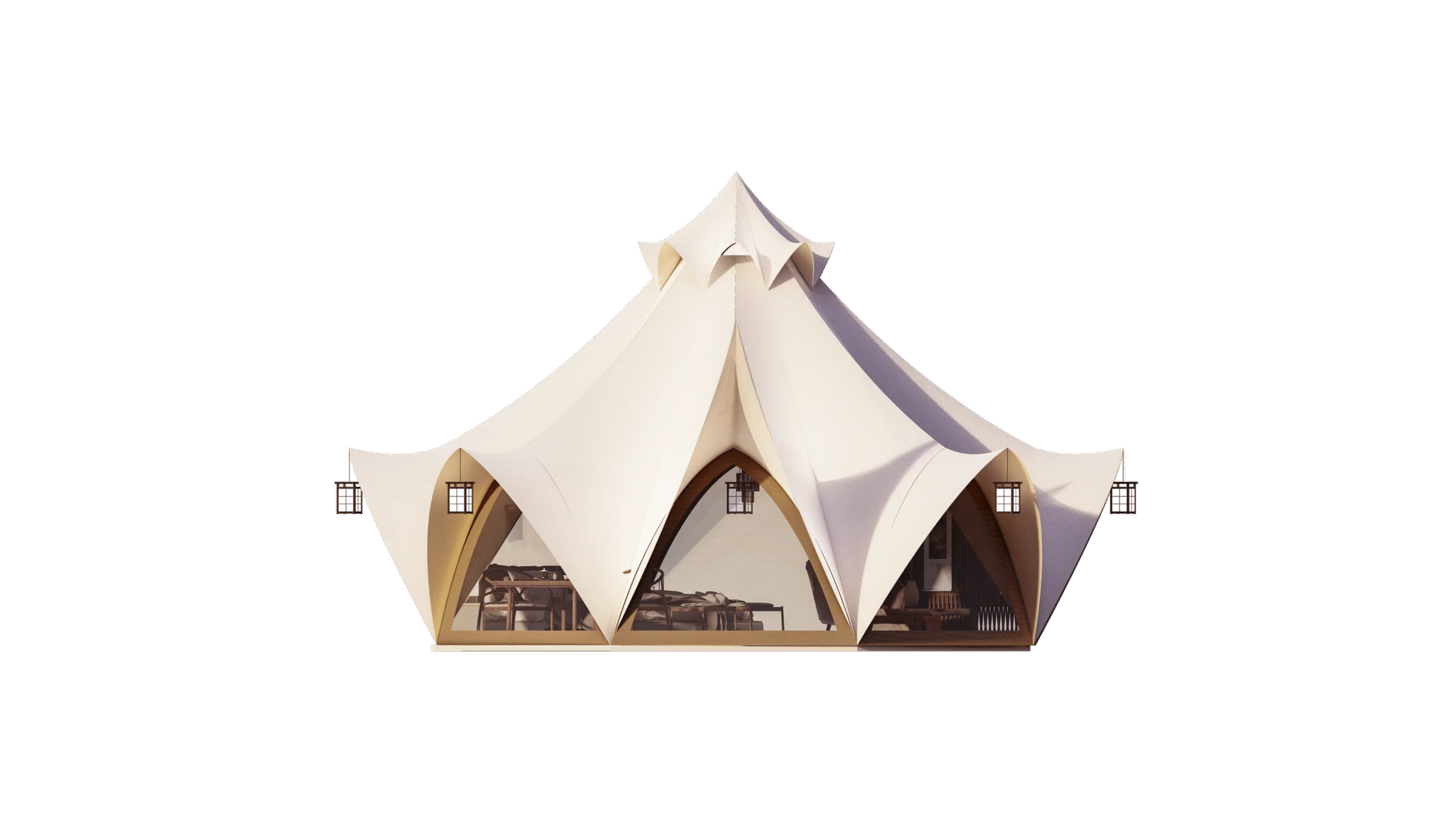
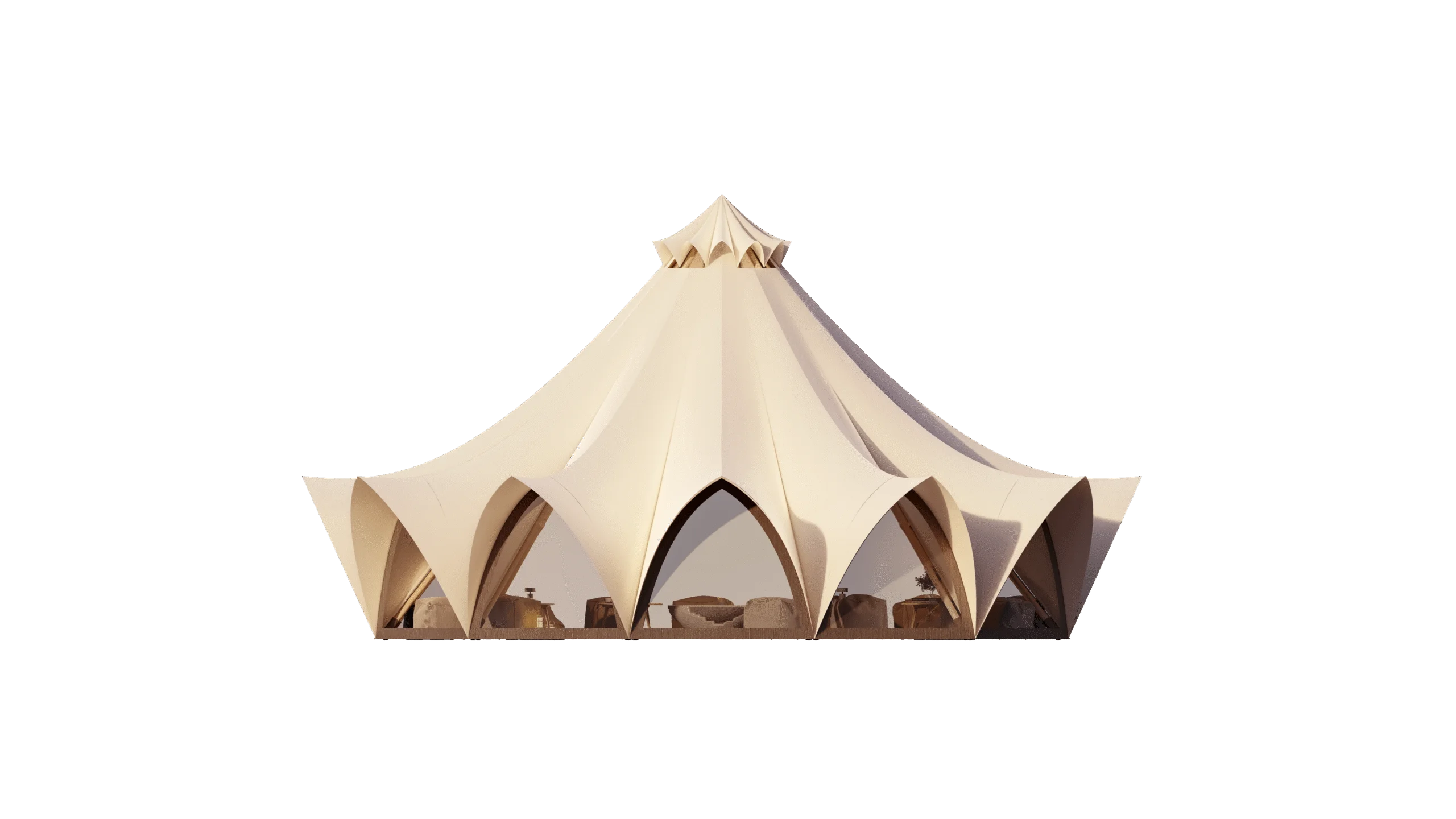
Enchantents works in the modular tier. We build 19 permanent models at our Veracruz facility, deliver in 2 to 10 weeks, and price at $350 to $750 per square meter. Installation uses reversible dry connections. No concrete, no foundation pour. A hotel project in Valladolid runs 34 of our units across four models today, from guest rooms to a lobby. That matters when you model land reuse or exit, and it feeds the payback math above. The full lineup is in the product catalog.
One line item sinks more pro formas than any other: site development. Budget another $15k to $40k per unit for roads, utility pads, and landscaping. Leave it out and the ROI model is fiction.
The partnership shortcut for landowners
Not every great site belongs to someone with capital. Under a partnership model, the problem splits in two. The landowner brings the horizontal layer: land, access, utilities. The operator brings the vertical layer: the units and the playbooks. Revenue shares typically run 30% to 35%.
This structure sidesteps the cold shoulder traditional lenders give glamping, since neither party carries full project debt alone. It also keeps experts in their lanes. One manages the ground. The other optimizes the asset stack. For a deeper dive on the business side, see negocio glamping Mexico.
Seasonality is where models die
An annual average is a comfortable fiction. Debt service comes due every month. Three numbers tell you if a property survives:
- Peak to trough ratio. Yellowstone properties see 25:1 swings. Zion sits near 5:1. If trough month occupancy lands in the teens, the annual mean will not save you.
- Trough month DSCR. SBA and USDA lenders now size debt against your weakest three consecutive months. A 1.40x annual DSCR means nothing if February triggers a technical default.
- Opening month timing. New properties open at roughly 77% of stabilized occupancy in year one. Open just before a peak season. Open into a trough and you eat the ramp-up discount and the seasonal discount at the same time.
Model the weakest quarter first. Everything else is presentation.
Where projects stall: zoning and septic
Glamping is rarely a defined use in Mexican municipal codes. Approvals come through adjacent classifications: Campamento, Recreational Resort, or Agritourism. Pick the target classification early, because it dictates infrastructure requirements.
Infrastructure is the real gate. Solve the Big Three early: electricity, water, septic. Septic capacity is the single largest cost driver and the most common point of failure in horizontal development. Build units to permanent code from day one, too. Temporary or unpermitted classifications are exposed to sudden ordinance shifts.
The Monday morning checklist
- Validate at 30% design. Lock value engineering before inflation eats the savings. Use prefabricated bathroom modules to hedge labor tightness.
- Control distribution. The top three OTAs control 71% of global short term rental revenue. A direct booking engine claws back 10% to 15% in commissions.
- Hedge the peso. On builds of $1M or more, forward swaps protect against 5% to 10% volatility swings.
- Size reserves on the trough. Set the operating reserve against your deepest three month drawdown, not the annual average.
- Treat amenities as table stakes. Private bathrooms and wellness features drive the $251 national ADR benchmark. They are not upsells anymore.
For more on unit level returns, read our luxury glamping tent ROI breakdown. If you want numbers for a specific site, talk to us. Bring your land details and we will run the model with you.